

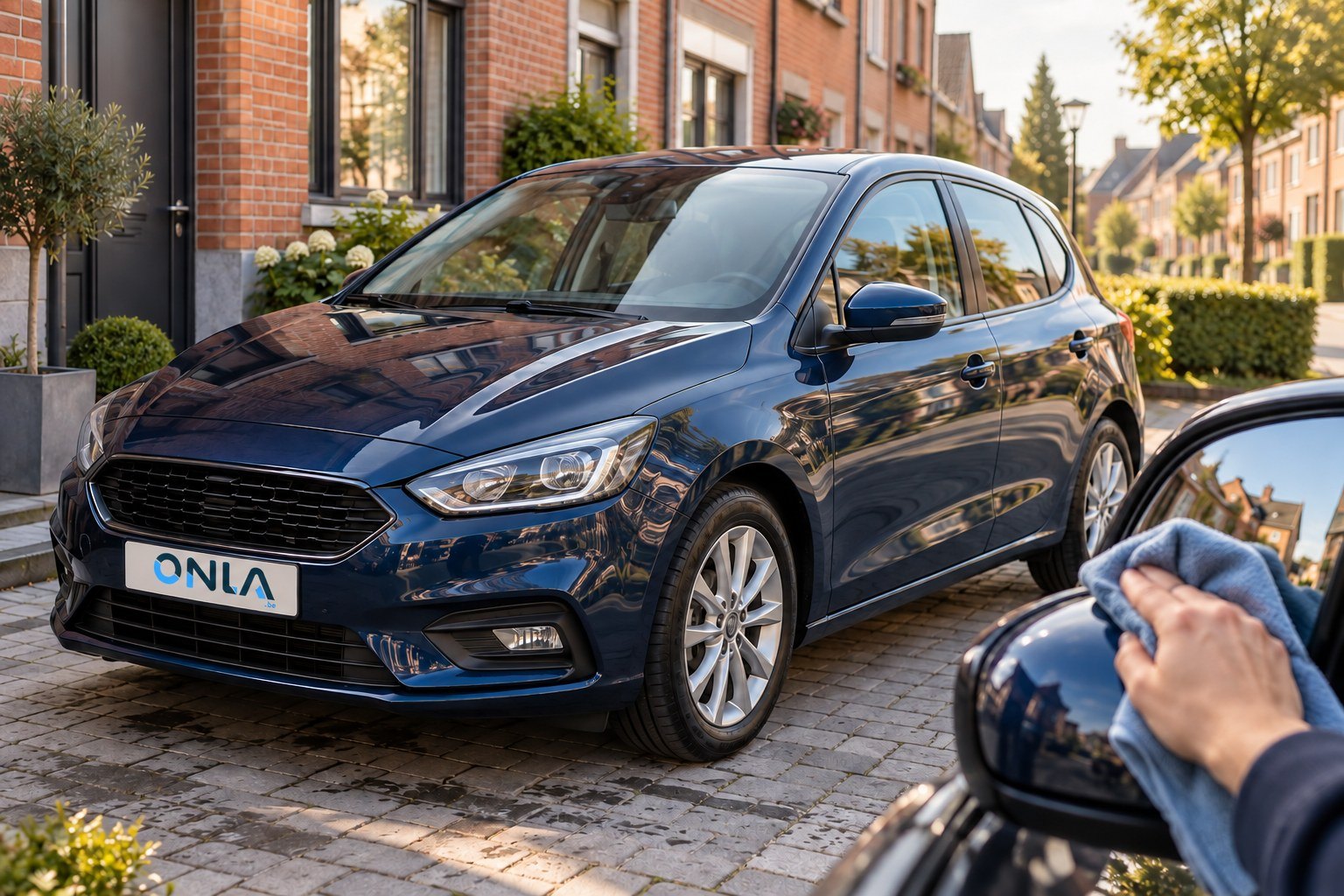
Preparing a used car for sale starts long before you meet the buyer. A clean interior helps make a good impression, but the purchase decision often depends on other things: a clear service history, an honest description of the condition and documents that are ready. In Belgium, this also involves Car-Pass and the technical inspection procedure.
Below is a practical plan for an owner selling a standard passenger car to a private buyer for use in Belgium. Sales to dealers, exports and vehicles that are not roadworthy require a separate check of the procedure.
1. Assess the car's condition before setting a price
Inspect the car as a buyer would. Check the bodywork in daylight, look at the condition of the interior and make sure the main equipment works. Note any issues: this list will be useful both for repairs and for the listing.
- Safety: brakes, tyres, lights, windscreen wipers, seat belts.
- Mechanical condition: engine starting, unusual noises, signs of leaks, dashboard warnings.
- Comfort: air conditioning, heating, electric windows, locks, multimedia system.
- Appearance: scratches, dents, chips, damage to wheel rims and upholstery.
If the cause of a fault is unknown, it is better to have it diagnosed at a garage. Do not promise “perfect condition” if you have not checked it. For an electric car or hybrid, gather the available battery reports, servicing documents and charging cables.
Which expenses are worthwhile
Start with faults that affect safety and inexpensive jobs that fix obvious inconveniences: a faulty bulb, worn wipers or a missing small part. Before undertaking an expensive repair, compare its cost with a realistic price for the car after the repair.
Not every cosmetic defect needs fixing. Sometimes it is more sensible to show a scratch in a photo and reflect it in the price. Do not hide leaks, clear fault codes just for the viewing or mask smells with strong air fresheners.
2. Prepare the documents and service history
Gather the documents in one folder and check that the vehicle details match. If anything is missing, arrange a replacement in advance: a missing document can delay the sale.
| What to prepare | What to check |
|---|---|
| Registration certificate | If the document consists of two parts, prepare both. |
| Certificate of conformity | Certificat de conformité / gelijkvormigheidsattest. |
| Technical inspection documents | The valid inspection document and the set of sale documents required under the applicable procedure. |
| Registration application | The form used to register the vehicle in the buyer's name. |
| Car-Pass | Check the issue date and mileage history. |
| Service book and invoices | Proof of major work and the most recent service is particularly useful. |
| Documents for special equipment | For example, documents for LPG equipment, if fitted. |
| Original purchase document | Prepare the purchase invoice or contract you have. |
A general list of documents is published on the official Belgium.be portal. For a specific vehicle, confirm the required set of documents with the inspection centre.
Separately, gather all keys, the spare wheel or repair kit, the set of seasonal wheels and any accessories included in the sale. Do not photograph documents showing your home address, signatures or other personal details for a public listing.
3. Understand Car-Pass and the technical inspection
Car-Pass: proof of mileage history
When selling a used car to a private buyer, the seller must provide a Car-Pass that is no more than two months old. This obligation also applies when selling to a foreign private buyer; an exception applies when the buyer is a professional car dealer. If no Car-Pass is provided, the buyer can demand cancellation of the sale and a refund.
Check the document in advance. If you find an error, contact Car-Pass to have it corrected. When signing the contract, include the Car-Pass number and record that the buyer has received it. Details are available in the Car-Pass guide for sellers.
The mileage history helps assess the transparency of the sale, but it does not in itself replace a check of the engine, bodywork and other vehicle components.
Regular technical inspection and pre-sale inspection
Do not assume that a valid periodic technical inspection is automatically sufficient for a change of ownership. Under the procedure in force on the date checked, a standard sale to a private buyer requires a used-vehicle inspection before registration in the new owner's name. In Wallonia, this is explained by Autosécurité.
When booking with the inspection centre, say that you are preparing the car for sale. Confirm the required documents, type of inspection and current fees. Do not leave the paperwork until the keys are handed over.
Changes in Flanders: according to the official Vlaanderen.be portal, the mandatory inspection for a car sold within Belgium will be abolished from 1 January 2027; it will remain mandatory for imported cars. On the date this article was checked, 7 October 2026, the change had not yet come into force. Before the sale, check the procedure applicable to your situation.
The official Vlaanderen.be pre-sale inspection page also states that the registration application is valid for two months. Plan the paperwork so that the buyer has time to register the car before it expires.
4. Tidy up the car without unnecessary expense
Wash the bodywork and wheel rims, clean the windows, and vacuum the interior and boot. Remove personal belongings, child seats and rubbish. Wipe surfaces so they look tidy, without a greasy shine.
If there is a persistent smell in the interior, deal with its cause. Let the car dry after cleaning before a viewing. Do not wash the engine bay merely to hide signs of leaks: seeing the car's actual condition matters more to the buyer.
The aim of preparation is to present a well-maintained car with a clear history. Minor signs of use are normal for a used car, as long as you do not try to hide them.
5. Set a price based on comparable listings
Compare cars of the same model and generation, with a similar engine, transmission, year of first registration and mileage. Take account of equipment, servicing, damage and the number of included accessories.
Save a few comparable listings and note the year, mileage, equipment and price. If you are looking at listings on OnLa.be, choose cars that are as similar as possible: this makes it easier to see which strengths to highlight in your own listing.
Distinguish between listings from private owners and professional sellers: the terms of sale may differ. The asking price reflects the seller's expectations, not a confirmed sale price.
- Set the price at which you are willing to list the car.
- Make a note of the minimum amount you are willing to accept.
- Prepare your supporting points: documented servicing, tyre condition, the set of keys and documents.
- Decide in advance whether the second set of wheels is included in the stated price.
An excessively high price can prolong the sale, while an excessively low one may raise questions. Justify the amount based on the car's actual condition.
6. Take photos that answer questions
Take photos in daylight against an uncluttered background. Avoid heavy filters: they distort the body colour and can hide defects. A practical guideline is 12–16 different shots, if the platform allows you to upload them.
- Overall views from the front and rear at an angle.
- Both sides, wheels and tyres.
- Front and rear seats, dashboard and boot.
- Mileage reading and useful equipment features.
- Separate photos of noticeable scratches, dents and other defects.
Check reflections in the windows and bodywork: documents or personal information should not accidentally appear in the frame. For the main photo, choose a clear overall view showing the entire car.
7. Write an honest, clear listing
The make, model, year and an important feature are enough for the title. In the description, state the mileage, fuel type, transmission, equipment, known faults, work carried out and your reason for selling, if you want to disclose it.
Separately, state whether the documents are ready, the number of keys, included accessories, the price and the town where viewings will take place. Only write “servicing supported by invoices” if you actually have the invoices. Do not promise that the car has never been in an accident if you do not know its history.
In Belgium, it is useful to prepare a clear version of the listing in French or Dutch, depending on your audience. The mileage, price and condition details must match across the different language versions.
Turn your preparation into a finished listing
Once the photos are taken, the price is set and the documents are checked, the next step is to offer the car to buyers. You can post a listing on OnLa.be: use the photos and description you have prepared, state the town where viewings will take place and set out clear terms of sale. This will make it easier for someone to assess the car and contact you with specific questions.
Before publishing, open the photos on your phone and reread the text. Are the defects visible? Is it clear which documents are ready and what is included in the price? If the listing answers these questions, you can focus on the car's condition and the terms of the sale at the viewing.
8. Arrange the viewing and handover
Arrange to meet in a convenient, safe place during daylight hours. Prepare the document folder and give the buyer time to inspect the car without being rushed. If a cold-start check has been arranged, do not warm up the engine beforehand.
Before a test drive, check the buyer's driving licence and ask your insurer about the conditions of cover. Accompany the buyer; do not give a stranger the car and its full set of documents for an unaccompanied drive.
Contract and payment
Draw up the contract in two copies. Include the parties to the sale, VIN, make and model, date of first registration, mileage, price, payment method, known defects and the items being handed over. Record the handover date and time, the Car-Pass number and confirmation that the buyer has received it.
Do not assume that a general phrase such as “sold as seen” replaces a description of known faults. It is important that both parties have the same understanding of the car being sold and the terms of the sale.
Hand over the keys and original documents only after full payment has been confirmed. Check that the transfer has arrived in your own banking app, rather than relying on a screenshot or an email from the buyer. You do not need to enter your card details through a link someone sends you or pay for “transfer activation” to receive money.
Number plates and insurance
For a standard sale, do not let the buyer drive away on your number plates based on a verbal agreement. Agree in advance on a lawful way to hand over the car, register it and insure it. Notify your insurer of the sale.
If you no longer need the number plate, arrange its deregistration through the DIV procedure. Since 1 August 2025, deregistration has been handled by DIV; handing the parcel to a postal operator does not in itself confirm that the plate has been deregistered. If you are changing cars, keeping the plate may be an option. The current options are described on the SPF Mobilité website.
Before the final handover, delete your phone contacts, navigation addresses and connected accounts from the multimedia system. Unlink the car from the manufacturer's app and remove devices used to pay for parking or other services.
Quick checklist before publishing
- The condition has been checked and known defects recorded.
- The bodywork, interior and boot are clean.
- The documents and service history have been gathered.
- The technical inspection procedure has been confirmed and document validity periods checked.
- The Car-Pass is ready for the sale to a private buyer.
- The price is justified, and the photos show both strengths and flaws.
- The arrangements for viewing, payment and handover have been planned.
Good preparation helps the buyer understand what they are paying for and helps the seller avoid unnecessary questions and disputes. Start with the condition and documents, then move on to cleaning and photos. Once everything is ready, all that remains is to publish the listing — for example, on OnLa.be — and arrange a viewing with an interested buyer.
The rules were checked on 7 October 2026. Sources: Belgium.be, Car-Pass, Vlaanderen.be, Autosécurité and SPF Mobilité. Before the sale, check the current requirements using the links in the article, especially for exports, sales to dealers or changes to regional rules.

Discussion
Sign in on the main website to leave a comment.
No comments yet. Start the conversation.