

Scheduled publication: 19 November 2026. Information checked on 21 October 2026.
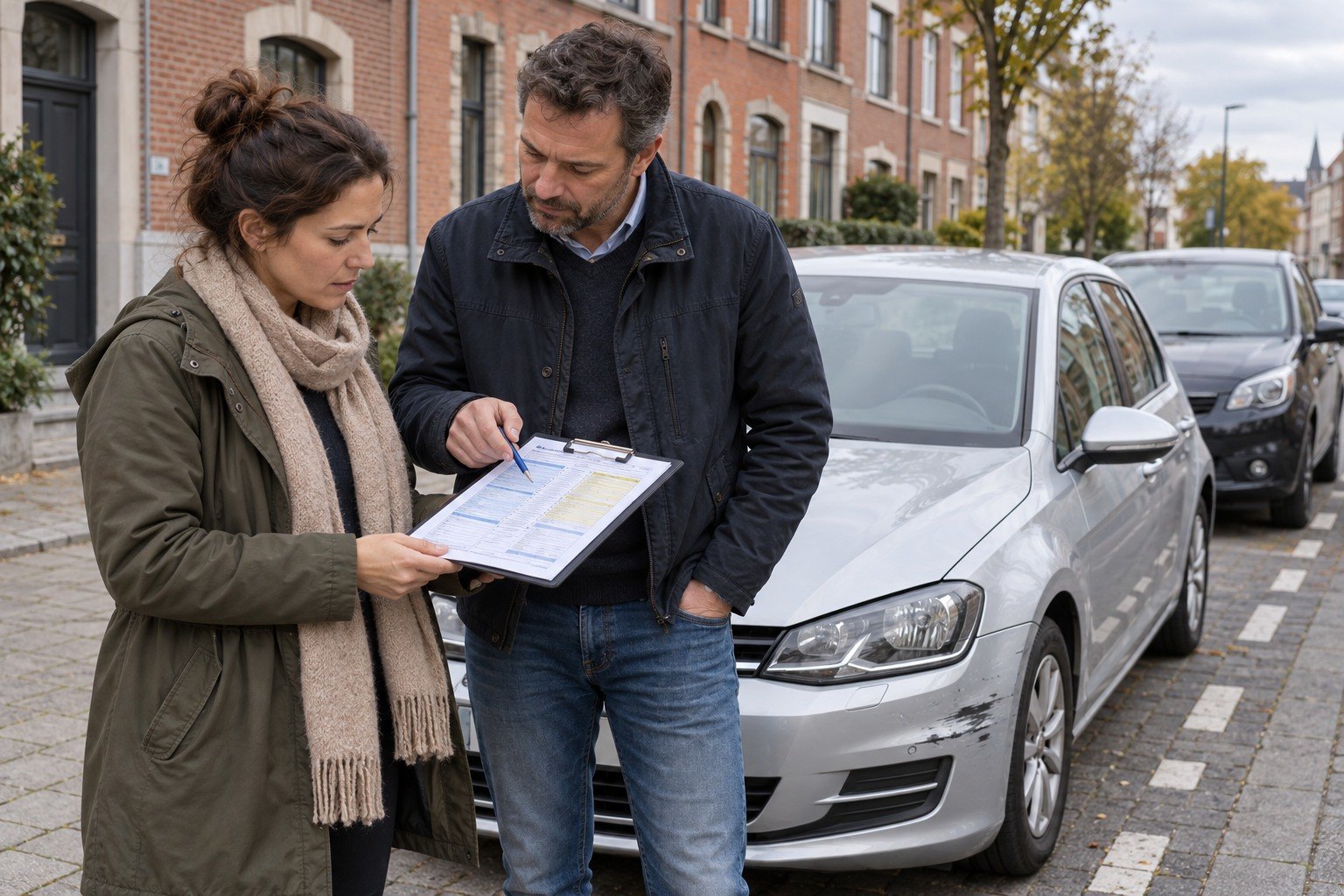
After a minor collision, stress can make you forget a registration number, a witness or an important box. The European Accident Statement, often called a “joint accident report”, is used to describe the facts for your insurer. When properly completed, it makes assessing the claim easier. If incomplete or contradictory, it can complicate discussions about liability.
Safety remains the priority, followed by an accurate description of the accident. Never sign a document that is blank, incomplete or describes a situation you dispute. Take the time to understand the boxes, sketch and remarks before separating the copies.
Before completing the accident report: make the scene safe and call for help if necessary
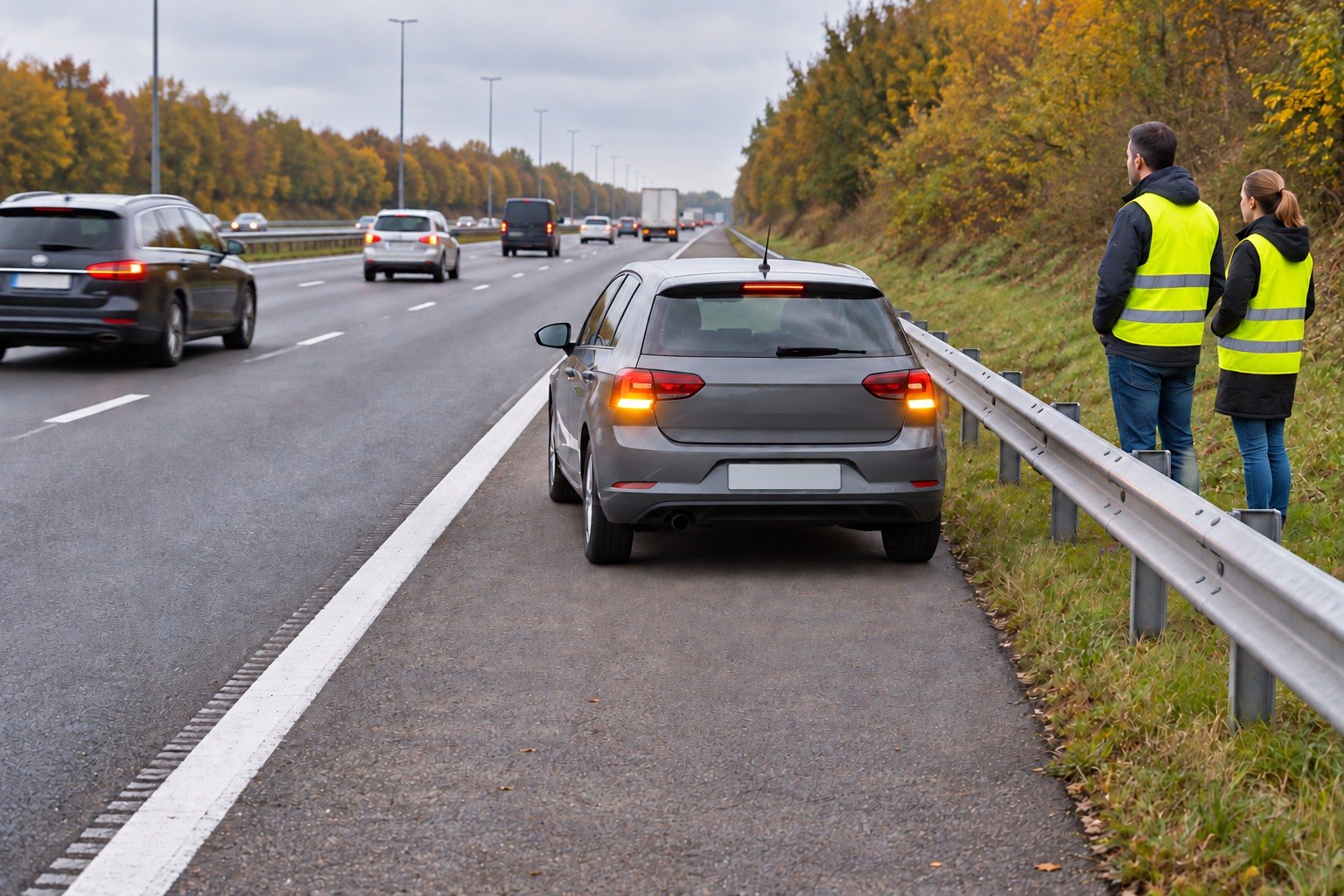
Stop, switch on your hazard warning lights and assess the situation. Put on your high-visibility vest before getting out near traffic, and warn others of the danger without exposing yourself to traffic. Do not stand between vehicles to fill in the form. On a motorway, first find a safe place to shelter, behind the safety barrier if possible; do not walk onto a traffic lane to take a photograph.
If anyone is injured, call 112 for emergency assistance and report the accident to the police. Give the precise location, direction of travel and any known information about the people affected. An accident report does not replace this step, even if the injuries seem minor. The official portal Belgium.be explains the initial steps to take after an accident involving injuries.
For urgent police assistance, particularly if there is danger or aggressive behaviour, call 101. If there is only minor property damage and no one is injured, drivers can generally complete their accident report themselves. Also notify the police if the damage is substantial or if there are other difficulties requiring their intervention.
When there is only property damage and the vehicles are obstructing traffic, the police point out that they must be moved promptly if they are still drivable. If it is safe to do so, photograph their positions first. Follow the instructions of the emergency services and police; do not maintain a dangerous situation for the sake of a sketch or photograph.
Does signing an accident report mean admitting liability?
No: signing does not, in itself, amount to an admission of liability. However, it gives considerable weight to the facts recorded. The boxes and sketch can affect your insurer's assessment. Writing “I do not admit liability” therefore does not correct an inaccurately described manoeuvre.
The police explain the role of the European Accident Statement : drivers describe the circumstances; liability is assessed afterwards. The labels A and B are used only to identify the vehicles. They do not mean “liable party” or “victim”.
One shared form for two vehicles
For a collision between two vehicles, use a single form with two copies if you can agree on a joint account. Decide which vehicle is A and which is B, then keep those designations throughout: administrative details, boxes, sketch and remarks.
Write legibly with a ballpoint pen on a firm surface so that the copy remains readable. Complete the front together; each driver then completes the back separately for their insurer. Each driver keeps one copy. The original and the duplicate each serve to report the claim.
These steps are covered in P&V's advice on the accident report. Before leaving, also check that your copy is legible: a copy that is too faint may make a policy number or a box impossible to read.
Filling in the accident report: sections to check
The table below follows the standard European template. It helps you find your way around; use the headings on your form and check each detail against the available documents. An example form and an explanatory guide are available from Ethias.
| Section | Information to provide |
|---|---|
| 1 and 2 | Date, time and precise location of the accident. |
| 3 | Any injuries, including minor ones. |
| 4 | Damage to other vehicles or objects. |
| 5 | Witnesses' names and contact details. |
| 6 | Policyholder or insured person. |
| 7 | Vehicle, registration number and any trailer. |
| 8 | Insurer, policy and validity of the insurance certificate. |
| 9 | Driver and driving licence details. |
| 10 | Point of initial impact, indicated by an arrow. |
| 11 | Visible damage. |
| 12 | Circumstances to tick for A and B. |
| 13 | Sketch at the moment of impact. |
| 14 | Each driver's remarks. |
| 15 | Signatures after checking. |
Identify the people involved and check the documents
The policyholder and the person driving are not necessarily the same. A car may belong to a company or be driven by a relative or friend. Do not automatically copy the same name into every section.
Compare the information with the driving licence, identity documents and insurance certificate. In particular, check the registration number, insurer's name, policy number and validity dates. If documents are missing, do not match or raise doubts, contact the police. Ethias recommends carrying out this check before finalising the document.
A careful check also helps prevent simple mistakes: an incorrectly copied letter in a registration number or an incomplete number can lead to requests for further information. Read the characters aloud if necessary, without confusing verified details with information the other driver has only given you verbally.
Section 12: tick the exact circumstances
The central column lists several possible situations for each vehicle. Read each statement in full. Tick only those that match the facts and apply to your column, then enter the total number of boxes ticked in the space provided. Do not tick a manoeuvre simply because it seems close to what happened.
Section 12 and its various statements should not be confused with the form's general sections. If a statement seems ambiguous, ask your insurer or broker for an explanation before signing. A cross added “to save time” can change the meaning of the document.
Fictional example: your vehicle was stationary when another vehicle hit it. Do not tick a statement in your column describing a manoeuvre you were not carrying out. The visible point of impact and the manoeuvre are two different pieces of information: one does not replace the other.
Section 13: sketch the situation at the moment of impact
The sketch should allow someone who was not there to understand the scene. Draw the lanes, identify A and B, and add the directions of travel, street names and relevant road signs and markings. Show the positions at the moment of the collision, not just where the vehicles were parked afterwards.
Keep the proportions clear. A car drawn straddling two lanes may convey something different from what you intended. Check together that the arrows, letters and positions match the boxes ticked.
Before finalising the sketch, ask yourself three questions: can you see where each vehicle came from? Is it clear where they collided? Can you distinguish established information from an assumption? If you do not know a distance or speed, do not invent a precise figure.
Section 14: write useful remarks
This space allows you to clarify the facts or explain your disagreement. Choose a descriptive sentence rather than a judgement about the person. For example, “I dispute the lane change attributed to A” is more useful than “the other driver is lying”.
The explanations from insurance broker Van Dessel point out that a remark made by one party is not automatically proof of the fact stated. Nor does a written reservation magically erase a contradiction elsewhere in the accident report.
Fictional example: “I dispute the position of A shown in the sketch. From what I observed, A was entirely within its lane. We are unable to agree on a joint account.”
Use this example only to understand the type of clarification expected. Your own text must reflect what you personally observed.
Photographs and witnesses: add to your file without taking risks
When it is safe to do so, take photographs showing an overview of the scene, the vehicles' positions, registration plates, damage and relevant road signs and markings. A close-up photograph of a scratch shows what it looks like, but does not explain on its own how the accident happened.
Ask witnesses for their names, addresses and telephone numbers, and note what they actually saw. Specify if someone is a passenger in a vehicle involved rather than presenting them as an independent witness. Keep the original files and avoid annotations that could obscure a detail.
The AXA Belgium's recommendations after an accident include photographs and witnesses' contact details. Send these to your insurer; posting them on social media does not help you prepare your statement calmly.
Disagreement or refusal to sign: what should you do?
Do not force anyone to sign, and do not sign a joint account you believe is incorrect. Record the available information, specify exactly what you disagree about and prepare your statement with your own account. Mention any refusal to sign if it actually occurred.
You can contact the police for guidance. They do not automatically attend every disagreement about a minor collision. However, injuries, danger, suspected driving under the influence, problems with documents or aggressive behaviour call for a response suited to the situation. Do not pursue a driver who leaves the scene: note their registration number if you can do so safely.
The Wikifin checklist, an FSMA initiative, specifically allows for separate forms in the event of a disagreement. A report not signed by the other party does not automatically prove that you are right; it remains important to report the facts and attach the available evidence.
After signing: do not alter the front on your own
Read everything again before signing: identities, boxes in both columns, total number of boxes ticked, sketch and remarks. Do not leave any essential field to be filled in later. Each driver takes their own copy; photographing the final version of the front also provides a legible record.
Once the copies have been separated, do not tick an additional box, add a witness or draw a new sketch on your copy alone. If you spot an error afterwards, notify your insurer promptly, providing an explanation and any relevant documents. Ask how to submit any additional information without altering the original document.
When and how should you send the accident report form to your insurer?
According to the FPS Economy, when reporting a motor third-party liability claim, you must notify your insurer as quickly as possible and, in principle, within eight days. The FPS specifies that missing this deadline cannot be held against you if the claim was reported as quickly as could reasonably be expected. Even so, do not wait until the deadline.
Send your written claim notification, the accident report form and supporting documents through the channel specified by your insurer. Keep a copy and confirmation of sending. The presence of the police does not remove your obligation to report the claim: your insurer can start work without waiting for a police report.
Also complete the reverse side with the information requested: the police report reference if you know it, information about injured people and the repairer’s contact details, depending on the form. Wikifin clearly distinguishes this individual reverse side from the shared front. If pain develops later, seek medical advice and inform your insurer without rewriting the signed front.
Crashform, no form available and special cases
Crashform, presented by Datassur, lets you complete an electronic accident report form, add photos and send the signed document. Check the recipients’ addresses and make sure you receive your copy. Paper forms remain valid; a flat phone battery should not leave you without an alternative.
If no form is available, immediately record identities, vehicle and insurance details, witnesses and circumstances. Contact your insurer to prepare a complete claim notification; do not lose contact details assuming you can find everything later.
If several vehicles are involved, complete the necessary accident report forms with the drivers who collided with you and describe the full sequence of events. If the other owner is absent, or if you have damaged property whose owner you cannot identify, contact the police for guidance on the appropriate steps. Do not leave assuming that a simple note fulfils all your obligations.
Repairs and follow-up on your claim
Before arranging major repairs, ask your insurer what inspections or expert assessments are needed. Check the terms for assistance, towing and a replacement vehicle separately: completing an accident report form does not guarantee that all costs will be covered.
To find a service provider afterwards, you can browse the listings available on OnLa.be, then compare quotes and check references. First ask your insurer to clarify the procedure you must follow for your claim.
The final check before leaving
- Everyone is safe and the necessary emergency services have been notified.
- Vehicles A and B are identified consistently throughout.
- Identity and insurance details have been checked.
- The boxes ticked, the sketch and the remarks reflect the facts.
- You understand what you are signing and keep a legible copy.
- You have the photos, witness details and relevant references needed to report the claim promptly.
Discussion
Sign in on the main website to leave a comment.
No comments yet. Start the conversation.