

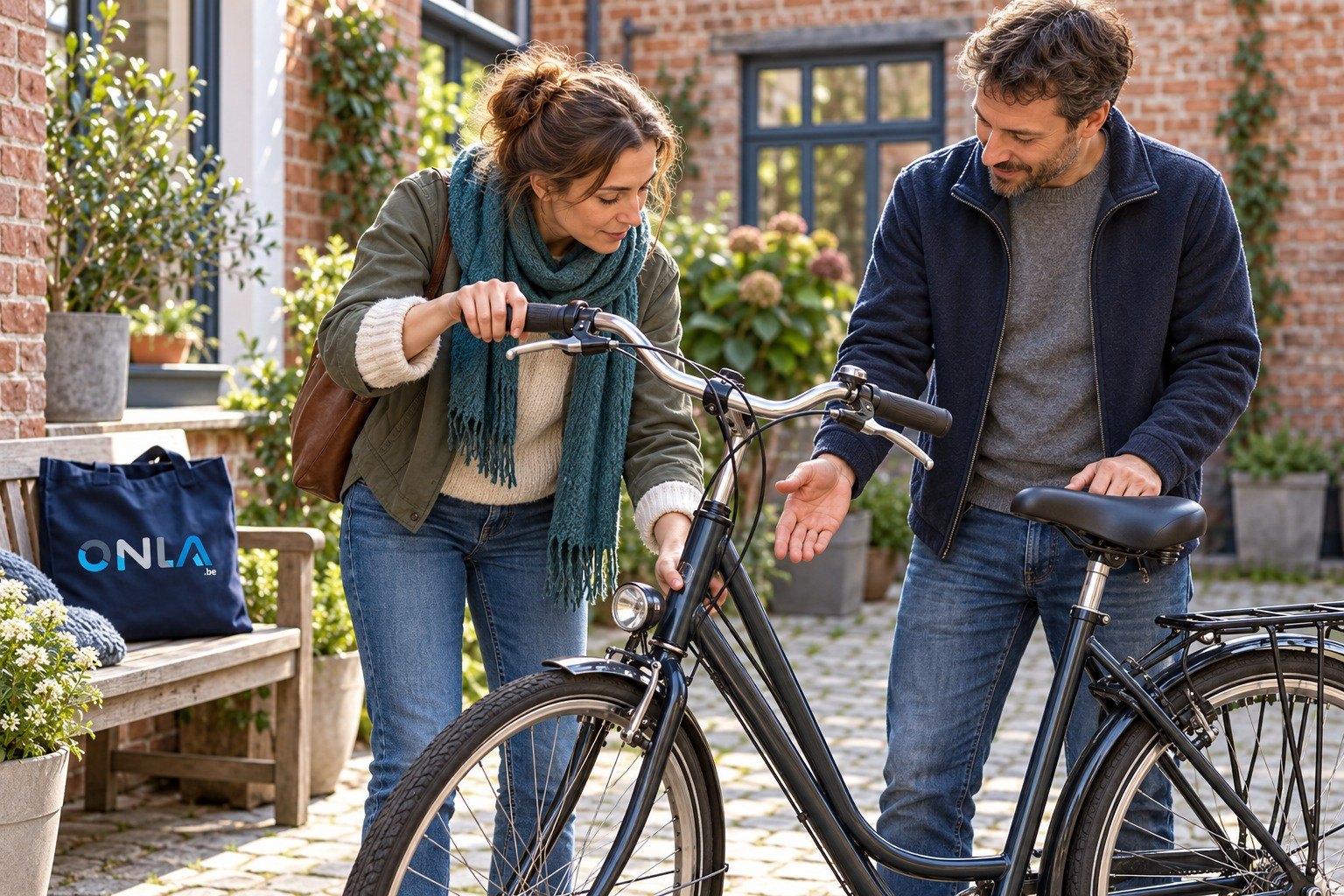
Selling a bike, looking for furniture or comparing property listings in Belgium? Scammers may pose as buyers, sellers, couriers or even the support team of a well-known website. Their goal is often the same: to push you into paying, sharing codes or handing over an item before you have actually received the money.
The right approach: check the person, the item, the payment and the website address separately. A convincing listing, a familiar logo or a screenshot is not enough. Here is a practical approach to buying and selling more cautiously, on OnLa and other classified ad websites.
Advice and contacts checked on 29 October 2026, drawing in particular on recommendations from FPS Economy, the Federal Police, Safeonweb and payment protection services.
Have you already shared a banking code or sent money? Contact your bank immediately through its official channel. In the event of fraud, Fraudstop can be reached on 078 170 170, 24 hours a day, 7 days a week. Card Stop also uses this number to block an affected card or payment method. Detailed steps are provided below.
1. Warning signs that should make you slow down
Do not look for a single sign of trustworthiness: cross-check information. An old profile may have been hijacked; reviews may be fabricated. Conversely, a new account, an accent, a mistake in French or a foreign phone number does not prove that someone is a scammer.
| What you notice | The risk | Your response |
|---|---|---|
| A price far below comparable listings, with an immediate decision demanded. | Pressure to act quickly replaces proper checks. | Compare offers and ask for details before making any commitment. |
| Refusal to show the item or answers that avoid your questions. | The listing may not correspond to an item that is actually available. | Postpone payment until you have carried out satisfactory checks. |
| A link sent to “receive” the money from your sale. | Fake payment or data theft. | Do not enter your details there; check directly in your banking app or official account. |
| Verification or insurance fees imposed by a supposed buyer. | You pay instead of being paid. | Refuse the procedure and check the service through an independent channel. |
| A screenshot or email presented as definitive proof. | The document may be forged. | Check for yourself that the payment has actually arrived. |
| A request for a secret code, an itsme confirmation or installation of an app. | Account takeover or authorisation of a transaction. | Stop the process and check with the official service. |
The FPS Economy points out that positive reviews do not guarantee trustworthiness. Your decision should also be based on how the transaction actually proceeds.
2. Selling? Recognise the main traps
The “one-cent account verification”
The buyer claims they want to verify your identity or account. They send a link to pay a tiny amount, sometimes €0.01. The page looks like a bank's website and asks for authentication codes.
The small amount is a pretext: access to your bank account may be at stake. To receive a bank transfer, you do not need to share your PIN, codes generated by a card reader or a security code sent by SMS. FPS Economy describes this one-cent scam in detail.
The fake courier asking for fees
The buyer says a courier will collect the item. You then receive a message asking for fees to insure the shipment, release the funds or confirm your details. The name and logo of a real courier are used to make the story credible.
Arranging delivery is not suspicious in itself. The problem is a procedure imposed by a stranger, especially if you have to pay or provide codes to receive the money. Find the courier's official website yourself and check the service offered. Read FPS Economy's advice on fake couriers.
Fake proof of payment
Someone shows you a banking app or a document marked “completed”. This does not prove that your account has been credited: it may be an image, a fake app or a transaction that did not go through.
Check your own banking app, which you have opened yourself. Do not hand over the item based solely on the buyer's screen. If the payment is not visible, suggest completing the sale later. This scam is explained by FPS Economy.
If someone claims to have overpaid and demands an urgent refund, first check the transaction with your bank. Do not rely solely on the attachment you received, and do not send money back to a new recipient under pressure.
3. Buying? Check the item before paying
Ask for information specific to the item: dimensions, condition, defects, included accessories and collection arrangements. For a device, ask to check the relevant functions. For furniture, also inspect corners, fittings and parts that are usually hidden.
An additional photo can help, but it does not guarantee that the person has the item. Compare the details with the listing and, if the images seem to have been reused, search for them elsewhere. Do not treat a video or a copy of an identity document as independent verification.
For a large sum or a bulky item, inspect it before finalising the deal whenever possible. Agree in writing on the item, price, payment, delivery or collection. Wikifin recommends cross-checking information and clarifying the terms of the transaction.
If the purchase must be shipped, check the actual terms of the service used: items covered, exclusions, claim deadlines and supporting documents required. Do not assume that shipping insurance or a payment service will automatically cover fraud. Refuse to commit if the risk remains disproportionate or the terms cannot be verified.
4. Links and QR codes: check the actual address
A “receive my money” button may lead to an imitation of a bank, courier or marketplace website. Do not rely solely on the logo or the name displayed in the message. Access the service by opening its usual app or typing its known address yourself.
HTTPS and the padlock do not prove that the company behind the website is honest. They relate to the security of the connection. A fraudulent website can use them too. DNS Belgium, together with Safeonweb and the Federal Police, explains useful checks.
Read the full domain name: a brand added at the beginning of a long address is not enough to identify the real website. Watch out for substituted letters, added words and addresses that differ from those you normally use.
A QR code can also open a fraudulent page. Before proceeding, check the destination and the action requested. A QR code sent by the other person to receive a payment deserves the same checks as a link. Safeonweb has documented phishing using QR codes.
5. Banking details, identity and itsme: what should you protect?
An IBAN and a name may be needed for an agreed bank transfer. These are not the same as a secret code, a banking password or authorisation of a transaction. Never give the other person codes that allow you to log in or authorise an action.
In itsme, read the name of the requesting organisation and the exact nature of the action: logging in, signing or another transaction. Do not confirm a request you did not initiate yourself. The official itsme service provides its security guidance.
Limit the personal information you share to what is necessary and verified. A stranger who sends their own identity card does not oblige you to send yours: the copy may be stolen. For a process that genuinely requires a document, first check the recipient, the purpose and the appropriate channel.
Also protect your email and accounts with different passwords and two-factor authentication where available. The Federal Police explains how to strengthen account security. This protection does not remove the need to check the requests you receive.
6. Arrange the exchange with clear terms
Before meeting, agree on the price, what is included in the sale, the payment method and who will collect the item. One simple approach is to follow this order:
- Check: inspect the item and answer questions about its condition.
- Confirm: restate the price and the accessories or documents included.
- Check the payment: use your own tools, without following a link imposed by the other party.
- Hand over: keep a record of the sale appropriate to its value and nature.
Choose a suitable place and time. For a small item, a busy location can make meeting easier. For furniture to be collected from your home, prepare access and avoid unnecessarily exposing your belongings or personal documents.
A bank transfer, cash or a payment service does not eliminate all risks. If you use protection offered by a provider, check its coverage directly with that provider. If your bank displays a warning about the recipient, stop to understand it rather than following the seller’s instructions.
You can browse classified ads in Belgium on OnLa to look for an item or prepare a sale. Apply the same checks to every contact: a listing’s presence on a website does not replace checking the item, the payment and the agreed terms.
7. Fake support: do not let anyone steer you away from the official service
A scammer may claim to represent the platform or your bank and say that the payment is blocked. They then suggest a chat, a call or an app to “resolve” the problem. Knowing your listing or your number does not prove their identity.
Find the official contact channel yourself. Do not share codes or move your money to a supposed “secure account”. FPS Economy describes this bank impersonation.
Any genuine fees for publishing, visibility or a service you have chosen are separate from a payment demanded by a buyer to “release” the payment for an item. Check fees directly in your account or the service’s terms, without using a link received from a stranger.
8. What should you do if you have already clicked or paid?
Act according to what you have actually done. Clicking a link, entering a password and authorising a banking transaction are not the same situation. If you have doubts about a financial transaction, contact your bank immediately, without waiting to complete all the other steps.
| Situation | Priority action |
|---|---|
| Message received, with no interaction. | Do not follow the instructions. Report the message, then delete it. |
| Link opened, with no data entered or software installed. | Close the page. Check whether a file was downloaded or a permission granted; do not run anything. |
| Password shared. | Change it through the official service and also change it on any other accounts where it was reused. Review active sessions and recovery methods. |
| Card details, banking code or authorisation shared. | Call your bank immediately and have the affected payment methods blocked through official channels. |
| Money already sent. | Report the fraud to your bank, ask what action can be taken and keep the transaction references. |
| App installed at the other person’s request. | Stop following their instructions. Contact your bank from a secure device or channel and seek technical help for the affected device. |
Fraudstop lists the 078 170 170 for fraud, available 24/7, and provides contact details for banks’ fraud departments. Card Stop, on the same number, can block cards and certain payment methods. Also contact your bank about access to your banking services and the transactions concerned.
Dial the verified number yourself: an incoming call displaying a familiar name may be fraudulent. Card Stop states that its advisers never ask for your PIN or the access code for your payment methods.
No refund is guaranteed. A prompt request may allow action to be taken, but the outcome depends on the transaction and the case. If you paid by card, ask the issuer what dispute options are available. Do not present a dispute procedure as universal insurance.
9. Who should you report a scam to in Belgium?
The bank: limit the financial risk
Provide details of the transactions, amounts, times and anything you shared or confirmed. Also explain whether someone may have accessed your device. The bank needs the actual facts to assess the measures available.
The police: file a complaint
The Federal Police states that certain non-urgent incidents can be reported through Police on Web; you can also contact your local police station. See the official procedures for filing a complaint after an online scam. If your situation cannot be handled through the online portal, contact your local police zone.
Prepare a timeline and gather the listing references, exchanges, contact details used, links, proof of payment and useful screenshots. Keep the originals where possible. Also note the steps already taken with your bank.
Safeonweb: report suspicious messages
Suspicious emails or messages can be forwarded to suspect@safeonweb.be, with an appropriate screenshot if it is a text message. This report helps identify fraudulent links; it does not replace contacting your bank or filing a complaint.
ConsumerConnect and the listings platform
You can report the incident to the Economic Inspectorate through ConsumerConnect. The service also provides information about the steps you can take. This report is not a promise of an individual refund.
Also notify the platform concerned through its official channels. Provide the listing or account reference and relevant details. Save your evidence before you lose access to a conversation or listing.
10. Dispute or fraud: do not confuse the remedies
A late delivery, a disagreement about condition or a mistake does not automatically prove fraud. First ask for a written explanation where this remains appropriate. However, fake banking links, identity theft or a request for codes are grounds for stopping the suspicious process.
Also check whether the seller is a business or a private individual. Consumer law protections do not apply in the same way. ECC Belgium explains the role of the seller’s status on a platform.
The statutory 14-day right of withdrawal applicable to many distance purchases from a business, subject to conditions and exceptions, does not apply to products bought from a private individual. Your Europe clarifies this. This does not mean that fraud or any other recourse would be permitted between private individuals.
After a loss, also beware of a new contact who promises to recover your funds in exchange for an upfront payment. Safeonweb describes this fund recovery scam, particularly in the context of investments. Do not send more money based solely on a promise to recover the previous amount.
Your checklist before completing the transaction
- Are the price and description consistent with the item offered?
- Have I obtained specific answers and carried out the necessary checks on the item?
- Have the price, fees and handover arrangements been agreed in writing?
- Did I open the service myself, without following a procedure imposed by a stranger?
- Am I sure what I am paying for or authorising, and who the recipient is?
- If I am selling, have I checked the payment using my own tool?
- Have I saved the listing and relevant exchanges?
- Can I still take time to think without being pressured?
A simple message is often enough to set out your terms: “I would prefer to check the item and agree on payment directly. I will not share banking codes or use a link sent to release a payment.” If the other person refuses these precautions, you can walk away from the transaction.

Discussion
Sign in on the main website to leave a comment.
No comments yet. Start the conversation.